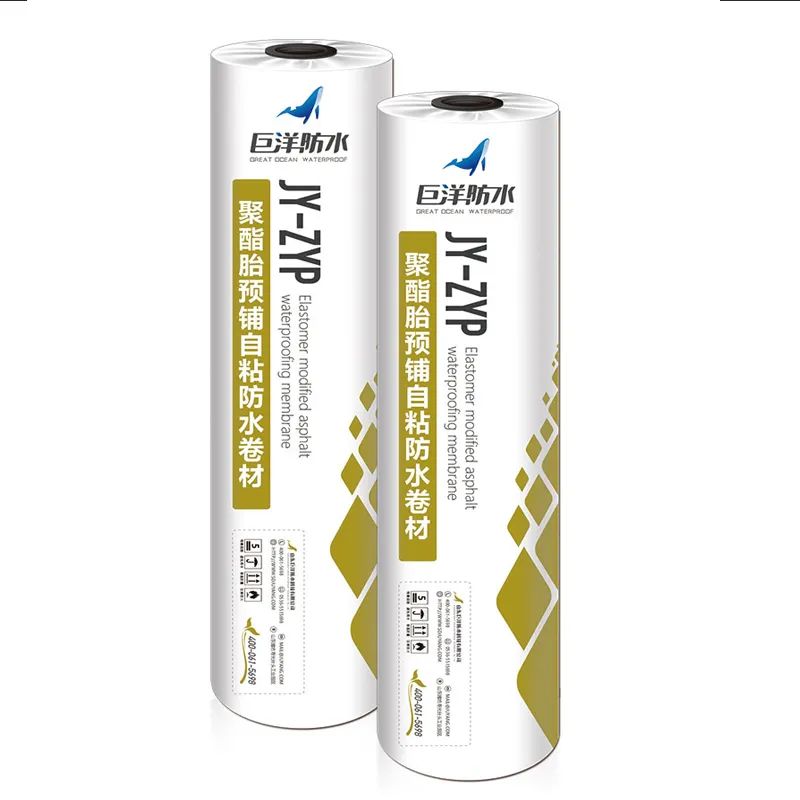
JY-ZYP Pre Laid Self-Adhesive Waterproofing Membrane
JY-ZYP Pre Laid Self-Adhesive Waterproofing Membrane is produced using petroleum asphalt as the base material, with styrene butadiene styrene (SBS), styrene butadiene rubber (SBR), and thickening resin as modifiers. It features a polyester tire base fabric reinforcement layer, fine sand on the upper surface, and an isolation film on the lower surface. As a manufacturer in China, our factory offers this curled sheet waterproof material at a competitive price.
Product Introduction
The JY-ZYP Pre-Laid Self-Adhesive Waterproofing Membrane is a rolled sheet material used in construction for waterproofing purposes. It features petroleum asphalt as the primary base, combined with modifiers including styrene-butadiene-styrene (SBS), styrene-butadiene rubber (SBR), and thickening resin. A polyester tire base fabric serves as the reinforcement layer, with fine sand applied to the upper surface and an isolation film on the lower surface.
| Feature | Specification |
| Thickness | 4.0 mm |
| Width | 1.0 m |
| Length | 10 m |
| Reinforcement | Polyester Fiber |
| Surface Finish | PE / Fine Sand / Other Materials |
| Adhesive Type | SBS/SBR Modified Bitumen |
This membrane is designed for pre-laid installation, where the self-adhesive property allows it to bond directly to substrates in applications such as basements or roofs, forming a continuous waterproof barrier when properly applied. Similar products in the category are often used in non-exposed settings to prevent water infiltration in building structures.
Product Features for JY-SPA Spray Polyurea Waterproofing Coating
- Composed of a two-component system (A: isocyanate, B: amine compounds) that mixes at a 1:1 ratio during application, forming a 100% solids elastic coating without solvents or VOCs.
- Applies via high-pressure spray equipment, curing rapidly with gel times of 3-8 seconds, tack-free in about 3 minutes, and full strength within 24 hours.
- Available in Type I (standard) and Type II (enhanced) grades, with Type II offering higher tensile strength (≥16 MPa) and elongation (≥450%) compared to Type I (≥10 MPa tensile, ≥300% elongation).
- Provides a seamless, pinhole-free film that bonds fully to substrates like concrete, steel, or existing membranes, with pull-off adhesion exceeding 2.5 MPa.
- Exhibits tear strength of ≥40 N/mm (Type I) to ≥50 N/mm (Type II), and abrasion resistance with Taber loss under 150 mg after 1000 cycles.
- Maintains flexibility at low temperatures down to -35°C (Type I) or -40°C (Type II) without cracking, and resists flowing at high temperatures up to 70°C.
- Offers chemical resistance to mild acids, alkalis, and hydrocarbons, along with impermeability tested at 0.4 MPa for 2 hours.
- Supports application in thicknesses of 1.5-3 mm, suitable for complex surfaces, and tolerates environmental conditions from 5°C to 40°C with 30-85% humidity.
- Used in areas such as roofs, basements, water tanks, industrial floors, and marine structures, often requiring surface preparation and optional primers for optimal performance.
- Packaging includes 200-220 kg drums for component A and 200 kg for B, with a gray liquid form and options for IBC totes.
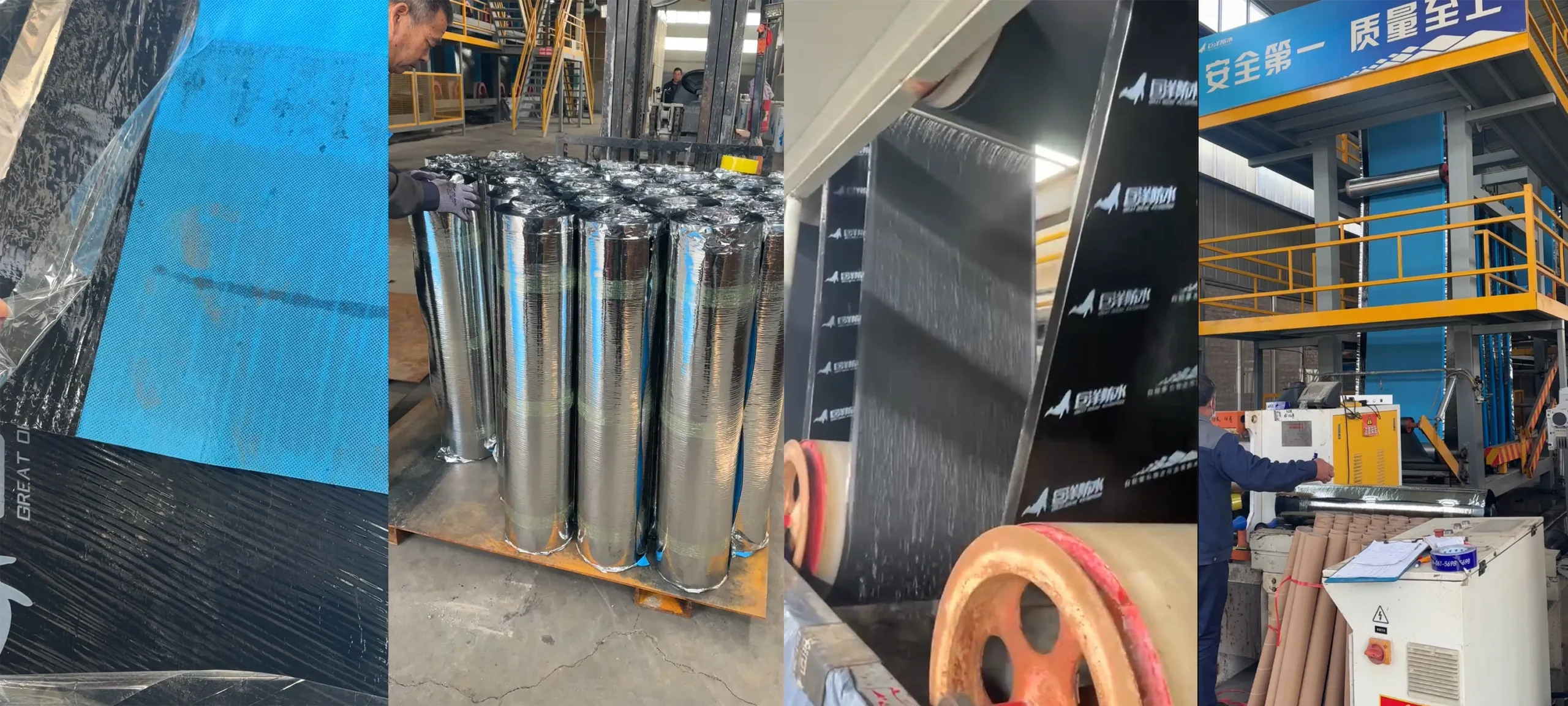
Performance Index
| No. | Item | Indicator | |
|---|---|---|---|
| PY | |||
| 1 | Soluble content/(g/m²) | 2900 | |
| 2 | Tensile property | Pulling/(N/50 mm) ≥ | 800 |
| Tensile strength /MPa ≥ | - | ||
| Membrane fracture elongation,% ≥ | - | ||
| Elongation at maximum tensile strength,% ≥ | 40 | ||
| 3 | Tear strength of nail rod ≥ | 200 | |
| 4 | Impact resistance (0.5kg·m) | No leakage | |
| 5 | Resistance to static loads | 20 kg, no-leakage | |
| 6 | heat resistance | 70 °C, no displacement, flow, or dripping for 2 hours | |
| 7 | Low temperature bending property | - | |
| 8 | Low temperature flexibility | -20 °C, no cracks | |
| 9 | Oil leakage/number of sheets ≤ | 2 | |
| 10 | Anti water channeling property | 0.8 MPa/35min,4hNo splashing water | |
| 11 | Peel strength of post poured concrete / (N/mm) ≥ | No processing | 1.5 |
| Immersion treatment | 1.0 | ||
| Surface pollution caused by sediment | 1.0 | ||
| UV aging | 1.0 | ||
| thermal ageing | 1.0 | ||
| 12 | Peel strength of post poured concrete after immersion in water/(N/mm) ≥ | 1.0 | |
| 13 | Thermal ageing (70℃, 168h) | Tensile retention rate/% ≥ | 90 |
| Elongation retention rate/% ≥ | 80 | ||
| Low temperature bending property | - | ||
| Low temperature flexibility | Adhesive layer -18 ℃, no cracks | ||
| 14 | Dimensional change/ % ≤ | ±0.7 | |
Applications
- Installed in below-grade structures such as basements, foundations, and retaining walls to block groundwater entry.
- Applied to horizontal surfaces like plazas, parking decks, and balconies for protection against surface water.
- Used in roofing assemblies on concrete or metal decks, often under ballast or vegetative layers.
- Suitable for tunnels and underground utilities where a continuous seal is required around penetrations.
- Employed in wet areas including shower pans, kitchens, and laundry rooms beneath tile or mortar beds.
- Utilized in retrofit scenarios on existing substrates with minimal preparation, adhering directly after film removal.
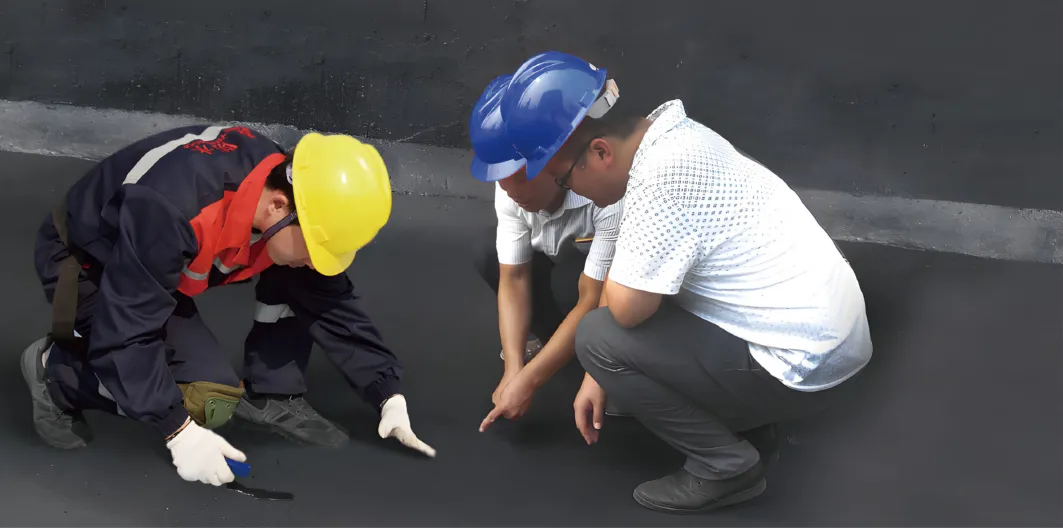
Case Studies
Project Example 1: Commercial Basement Retrofit in Urban High-Rise
In a mid-sized office building retrofit in a coastal city with high groundwater levels, the JY-ZYP membrane was applied to the foundation walls and slab covering approximately 5,000 square meters. The site faced challenges from ongoing water seepage due to soil saturation and construction vibrations from nearby development. The membrane's self-adhesive layer allowed for direct bonding to the concrete substrate without additional primers, and its polyester reinforcement provided resistance to punctures from rebar protrusions during backfill. Post-installation monitoring over two rainy seasons showed no water intrusion, maintaining dry interior conditions as confirmed by moisture tests.
Project Example 2: Residential Balcony Waterproofing in Multi-Unit Complex
For a 20-unit apartment building in a temperate region prone to heavy rainfall, the JY-ZYP membrane was used on balcony decks totaling 1,200 square meters. The project involved overlaying existing cracked concrete surfaces, where the membrane's 4.0 mm thickness and fine sand upper layer facilitated tile installation without slippage. Key issues included thermal expansion causing prior leaks, but the material's elongation properties (over 40%) accommodated movement without cracking. After one year, inspections revealed no leaks or delamination, supporting the building's compliance with local waterproofing standards.
Project Example 3: Underground Parking Garage in Resort Development
In a resort expansion project similar to large-scale hospitality builds, the JY-ZYP membrane was installed in an underground parking structure spanning 10,000 square meters. Challenges included irregular substrates and exposure to vehicular traffic during construction phases. The pre-laid application method enabled quick coverage, with the isolation film protecting the adhesive until concrete pouring. The system's full bonding prevented water migration, and tensile strength above 800 N/50mm ensured durability against settlement stresses. Follow-up assessments after 18 months indicated sustained impermeability, even under periodic flooding events.
Comparison Chart for Waterproofing Membranes
The following table provides a neutral comparison of the JY-ZYP Pre-Laid Self-Adhesive Waterproofing Membrane (a bitumen-based self-adhesive system) with common alternatives like torch-on bitumen membranes and HDPE membranes. Data is drawn from industry norms and typical product specifications, focusing on key attributes such as installation, durability, and cost factors.
| Attribute | JY-ZYP Self-Adhesive Membrane | Torch-On Bitumen Membrane | HDPE Membrane |
|---|---|---|---|
| Installation Method | Applied at room temperature by peeling the isolation film and pressing onto the substrate; no heat or special equipment required, suitable for pre-laid applications on concrete or similar surfaces. | Requires heating with a propane torch to melt the underside for bonding; involves skilled labor and safety precautions due to open flames. | Installed via heat welding or extrusion for seams, often loose-laid, mechanically anchored, or adhered with tapes; requires specialized welding equipment and trained installers for large areas like foundations or ponds. |
| Durability and Puncture Resistance | Features polyester reinforcement for resistance to punctures and tears; tensile strength around 800 N/50mm, suitable for below-grade or protected areas. | Multi-layer options provide high puncture resistance; often used in high-traffic or exposed settings due to robust bonding. | Offers high resistance to punctures, tears, and chemicals due to dense polyethylene structure; tensile strength typically 20-40 MPa, ideal for harsh environments like landfills or tunnels. |
| Temperature Resistance | Operates without flowing at high temperatures up to 70°C and no cracking down to -20°C; adaptable to moderate climate variations. | Handles extreme heat well (up to 80-100°C without softening in some formulations) but may become brittle in very cold conditions. | Maintains integrity across a wide range, typically from -70°C to 80°C without cracking or melting; suitable for extreme weather but may require UV protection if exposed. |
| Cost Factors | Mid-range pricing; self-adhered versions can be 40% more than torch-applied due to convenience, with material costs around $5-8 per square meter depending on region. | Generally lower material costs ($4-6 per square meter) but higher labor expenses from torch application; restricted in some codes due to fire risks. | Cost-effective materials ($3-7 per square meter) with potential savings on longevity, though installation costs rise due to welding equipment and labor; economical for large-scale projects. |
| Maintenance and Lifespan | Low maintenance in non-exposed uses; expected lifespan of 20-30 years with proper installation; repairs involve patching with compatible materials. | Durable with 20-25 year lifespan; seams are strong but may require periodic inspections for UV degradation if exposed. | Minimal maintenance required; lifespan often 50+ years in buried or protected applications; repairs typically involve welding patches over damaged areas. |
Customer Reviews
From a Contractor in the United States (Focus on Installation Ease):
We used this pre-laid membrane on a basement project in Chicago. It adhered directly to the concrete without needing extra tools or heat, which saved time during the wet season. The isolation film peeled off cleanly, and we covered about 500 square meters in two days. No major issues with bonding so far after six months.
From a Builder in Germany (Focus on Durability in Cold Climates):
In a residential foundation job near Berlin, this self-adhesive membrane held up during winter installation at around -5°C. The polyester reinforcement layer resisted minor punctures from rebar, and there were no cracks after freeze-thaw cycles. It integrated well with our drainage system, keeping the site dry through heavy rains.
From a Homeowner in Australia (Focus on Cost and Application in Wet Areas):
I applied this waterproofing membrane to my balcony deck in Sydney to stop leaks from frequent storms. At about $6 per square meter, it was within budget compared to other options. The 10-meter rolls were manageable for a DIY setup, and the fine sand surface allowed for tile overlay without slippage. It's been leak-free for over a year now.
From an Engineer in China (Focus on Performance in High-Humidity Environments):
For an underground parking structure in Shanghai, we chose this product for its anti-sticking properties during pre-laid construction. The 4.0 mm thickness provided adequate coverage against groundwater pressure, and elongation helped with slight substrate shifts. Inspections after 12 months showed consistent impermeability in humid conditions.
Frequently Asked Questions (FAQ)
What surfaces is this membrane compatible with?
It bonds to clean, dry concrete, masonry, or metal substrates. Surface preparation involves removing dust and loose materials, and primers may be needed on porous areas for better adhesion.
Does installation require heat or special tools?
No heat is needed; apply by peeling the isolation film and pressing onto the substrate at room temperature. Basic tools like rollers help ensure even contact, suitable for pre-laid setups before concrete pouring.
How does it perform in extreme temperatures?
The membrane resists flowing at up to 70°C and avoids cracking down to -20°C, based on its composition. It's adaptable for moderate climates but test in very cold or hot conditions.
What is the expected lifespan and maintenance?
With proper installation in non-exposed areas, it can last 20-30 years. Maintenance is minimal, involving periodic checks for damage; repairs use compatible patches overlapped on affected spots.
Is it suitable for DIY projects?
Yes, for smaller areas like balconies, as the self-adhesive design simplifies application. For larger or below-grade jobs, professional installation is recommended to avoid voids or overlaps.
How does it compare to torch-on membranes in terms of cost?
Material costs are around $5-8 per square meter, often higher than torch-on due to convenience, but it reduces labor expenses by eliminating flame risks and equipment needs.
Can it be used in wet or humid environments during application?
Apply on dry surfaces only; humidity below 85% is ideal to prevent adhesion issues. Once installed and cured, it provides impermeability against water and vapor.
What certifications does it meet?
It complies with standards like ASTM for waterproofing properties, including tensile strength and elongation. Check local building codes for specific requirements in your region.
About Our Factory
Great Ocean Waterproof Technology Co., Ltd. (formerly Weifang Great Ocean New Waterproof Materials Co., Ltd.) is located in Taitou Town, Shouguang City—the largest waterproof materials base in China. Established in 1999, the company operates as a high-tech manufacturer specializing in waterproofing, integrating research and development, production, and sales.
The factory covers 26,000 square meters and features multiple advanced production lines for waterproof rolls, sheets, and coatings. Its product range includes various polymer waterproof membranes (such as polyethylene polypropylene, PVC, TPO, and CPE), self-adhesive membranes, modified bitumen rolls, root-resistant variants, polyurethane coatings, JS composite coatings, and several types of waterproof tapes—totaling dozens of specifications.
With a strong technical team, advanced equipment, and complete testing instruments, the company maintains stable and reliable product quality. It has been certified by national authoritative testing institutions and holds recognitions including the National Ministry of Agriculture's "Comprehensive Quality Management Standard" title, quality assurance system certification, and Shandong Province's industrial product licenses and filing certificates.
Products are distributed across more than 20 provinces and regions in China and exported to multiple countries, earning consistent customer feedback. Guided by a modern management approach, Great Ocean Waterproof upholds the principles of integrity, pragmatism, and innovation, aiming for win-win partnerships through competitive pricing and reliable service.
Related products
-
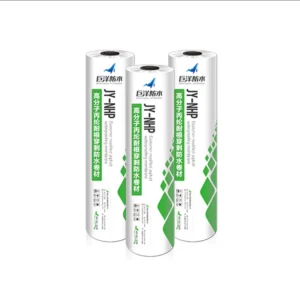
JY-NHP Root Puncture Resistant Polymer Waterproofing Membrane
-
![JY-ZSE High Elongation Self-Adhesive Waterproofing Membrane [e]](https://great-ocean-waterproof.com/wp-content/uploads/2025/12/JY-ZSE-High-Elongation-Self-Adhesive-Waterproofing-Membrane-e2_1-300x300.webp)
JY-ZSE High Elongation Self-Adhesive Waterproofing Membrane [e]
-
JY-NTT Modified Asphalt Copper Base Root Puncture Resistant Waterproofing Membrane
-
![JY-ZNU Self-Adhesive Polymer Waterproofing Membrane [N]](https://great-ocean-waterproof.com/wp-content/uploads/2025/12/JY-ZNU-Self-Adhesive-Polymer-Waterproofing-Membrane-N_1-300x300.webp)
JY-ZNU Self-Adhesive Polymer Waterproofing Membrane [N]
-
JY-ZCG Color Steel Tile Metal Roof Self-Adhesive Waterproofing Membrane