Advanced Polyurethane Waterproofing Systems for Timber and Multi-Substrate Architecture
The global construction landscape is currently undergoing a transformative shift toward sustainable, high-performance protective materials that can withstand the rigors of rapid urbanization and increasingly volatile climatic conditions. Within this context, Great Ocean Waterproof has solidified its position as a primary innovator in the development of polymer-based solutions, particularly in the critical domain of wood preservation and structural waterproofing. The versatility of polyurethane technology has enabled the creation of high-tensile, elastic, and chemically resistant barriers that address the inherent vulnerabilities of diverse substrates, from biological timber to synthetic electronics.

Comprehensive Profile and Strategic Market Authority of Great Ocean Waterproof
Established in 1999, Great Ocean Waterproof has accrued over 26 years of specialized experience in the research, development, and mass production of advanced waterproofing materials. The enterprise is strategically localized in Tai Tou Town, Shouguang, which is recognized globally as the premier and largest hub for the manufacturing of waterproof materials in China. This geographic positioning provides the company with a unique competitive advantage, allowing for vertical integration and a deep understanding of industry-standard requirements for global infrastructure projects.
The manufacturing infrastructure of Great Ocean Waterproof is characterized by a 26,000-square-meter facility housing 12 advanced production lines dedicated to the synthesis of liquid coatings, adhesive tapes, and bituminous membranes. As a certified high-tech enterprise, the brand emphasizes total quality management compliance and holds the “National Authoritative Test Qualified Product” status, ensuring that every batch meets rigorous international standards for durability and safety.
| Operational Metric | Specification and Capacity |
| Established | 1999 |
| Industry Hub | Tai Tou Town, Shouguang, China |
| Facility Area | 26,000 Square Meters |
| Production Lines | 12 Integrated Advanced Lines |
| Product Portfolio | Coatings, Rolls, Adhesive Tapes, Geotechnical |
| Market Reach | 20+ Provinces and Global Export |
The company’s value proposition is built upon the pillars of “Integrity, Pragmatism, and Innovation,” prioritizing a “Win-Win” benefit for its global partners. This commitment to excellence is reflected in their expansive liquid-applied range, where the polyurethane waterproof coating serves as a flagship technology for its high elasticity, seamless application, and environmental compliance.
The Chemical Foundations and Molecular Dynamics of Polyurethane Technology
The efficacy of polyurethane as a waterproofing medium is derived from its unique molecular architecture. Polyurethanes are formed through the step-growth polymerization of diisocyanates with polyols (polyethers or polyesters). This reaction forms a segmented block copolymer structure where hard segments, typically composed of the urethane linkages and aromatic or aliphatic rings, provide mechanical strength and thermal stability, while soft segments provide the flexibility required for crack-bridging and thermal movement.
In the specific formulation of a polyurethane coating waterproof system, the reaction is often moisture-triggered. The –NCO (isocyanate) groups in the prepolymer react with atmospheric moisture to form unstable carbamic acid, which subsequently decomposes into an amine and carbon dioxide. The resulting amine then reacts with another isocyanate group to form a urea linkage, creating a cross-linked network of extreme toughness.

This chemical pathway results in a seamless, rubber-like film that possesses high tensile strength and significant elongation capabilities. For professional applications, the distinction between single-component systems (like the Great Ocean JY-951) and two-component systems (JY-DPU) is critical. Single-component systems offer ease of use and reduced risk of mixing errors, while two-component systems allow for precise control over curing rates in variable environmental conditions.
Advanced Material Science of Wood Protection and Aesthetics
Wood is a hygroscopic biological material that naturally responds to changes in ambient humidity through volumetric expansion and contraction. Without adequate protection, this movement leads to internal stresses, surface cracking, and the eventual development of rot due to moisture entrapment. The application of a transparent waterproof coating for wood is therefore a technical necessity to preserve both the structural integrity and the aesthetic appeal of timber-based architecture.
The Evolution of Wood Finishing Technologies
Traditional wood finishes, such as natural oils or simple varnishes, often provide inadequate protection against UV radiation and liquid water ingress. Modern polyurethane systems have revolutionized this sector by offering a film-forming barrier that is both tough and elastic. A high-performance wood coating must possess specialized UV inhibitors to prevent the degradation of lignin, which is the natural binder in wood fibers.
| Coating Type | Key Characteristics | Recommended Application |
| Water-Based PU | Low VOC, Fast Dry, Clear Finish | Interior Furniture, Light Woods |
| Oil-Based PU | High Durability, Amber Tone | High-Traffic Floors, Outdoor Hardwoods |
| Aliphatic Topcoat | UV Stable, Color-Fast | Exterior Decks, Exposed Wood Structures |
| Acrylic-PU Hybrid | Non-Yellowing, High Clarity | Pale Woods, Architectural Accents |
The mechanical resilience of polyurethane allows it to withstand significant abrasion, making it ideal for wooden flooring in commercial and residential settings. Unlike more brittle coatings, PU can absorb impact energy without delaminating from the wood substrate.
Strategic Engineering for Roofing and Architectural Enclosures
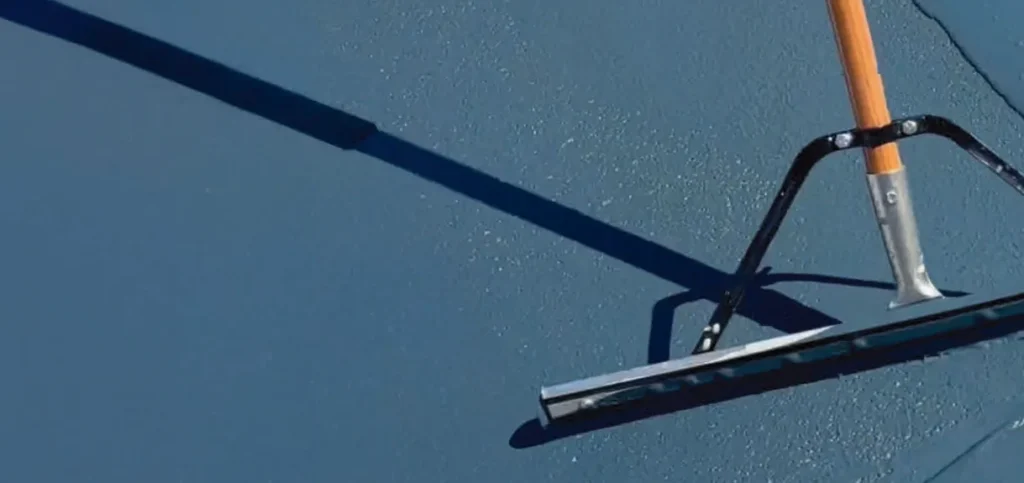
Roofing systems are subject to some of the most extreme environmental conditions, including direct UV exposure, large thermal gradients, and mechanical stress from structural movement. The use of a polyurethane waterproof coating for roof applications provides a monolithic, seamless barrier that eliminates the risk of seam failure, which is the primary cause of leaks in traditional membrane systems.
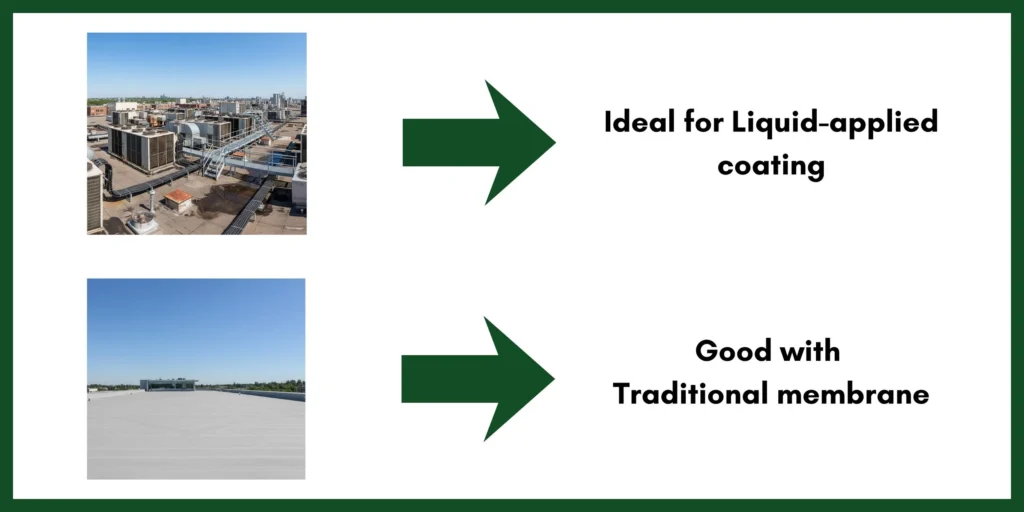
Liquid-Applied vs. Traditional Membrane Systems
While a waterproofing membrane made of SBS or APP modified bitumen offers robust protection, liquid-applied polyurethane provides a level of detail-handling that is difficult to achieve with sheet materials. For instance, a polyurethane waterproof roof coating can be easily applied around complex penetrations such as HVAC units, skylights, and drainage pipes, ensuring a continuous seal.
For projects requiring rapid deployment and cost-efficiency, the waterproof roof coating sector has increasingly adopted spray-applied polyurethane foam (SPF) and liquid membranes. These systems offer superior thermal insulation properties (R-value) while simultaneously serving as the primary waterproofing layer. In regions with high solar intensity, these coatings can be formulated with high solar reflectance indices to mitigate the urban heat island effect and reduce energy consumption in buildings.
Concrete Substrates and Subterranean Structural Integrity
Concrete, while inherently strong, is a porous material subject to carbonation and chloride ingress, which can lead to the corrosion of internal steel reinforcements. Utilizing a polyurethane waterproof coating for concrete provides a protective shield that bridges capillary pores and prevents the migration of liquid water and aggressive ions.
Sub-Grade and Foundation Waterproofing
Foundation walls and basements are constantly exposed to hydrostatic pressure and soil chemicals. A high-performance waterproof coating for basement walls must possess exceptional adhesion and resistance to biological attacks, such as mold and fungal growth. Great Ocean Waterproof’s PU formulations are specifically engineered to handle these conditions, offering a “crack-bridging” capacity that remains effective even if the building undergoes minor settling or seismic movement.
For aesthetic concrete applications, a clear waterproof coating for concrete is often employed. This allows the natural industrial look of the concrete to remain visible while providing the same level of moisture protection as pigmented systems. This is particularly popular in modern architectural designs for lofts, museums, and high-end commercial spaces.
Technical Comparative Analysis of Waterproofing Technologies
Selecting the appropriate waterproofing technology requires a nuanced understanding of the trade-offs between different material types. The following table provides a direct comparison between liquid polyurethane and the most common membrane technologies used in global construction.
| Technology Parameter | Polyurethane (Liquid) | SBS Bituminous | APP Bituminous | PVC Membrane |
| Material Base | Reactive Polymer | Synthetic Rubber/Asphalt | Plastic/Asphalt | Polyvinyl Chloride |
| Elasticity | Extremely High (>100%) | High (Elastomeric) | Low (Plastomeric) | Moderate |
| Seamlessness | 100% Monolithic | Seams Every 1m | Seams Every 1m | Heat-Welded Seams |
| Cold Flexibility | Outstanding (-40°C) | Excellent | Poor | Poor (Brittle) |
| UV Resistance | High (Aliphatic) | Moderate | Excellent | High |
| Chemical Resist. | High (Oils/Salts) | Low | Moderate | Excellent (Fats/Grease) |
| Installation | Roller/Brush/Spray | Torch/Self-Adhesive | Torch-On | Fastened/Adhered |
The integration of an sbs waterproofing membrane with a polyurethane topcoat represents a hybrid solution that combines the bulk thickness and tensile strength of a sheet with the seamless, UV-resistant properties of a liquid coating. Conversely, for budget-conscious projects in high-temperature regions, an app bituminous waterproofing membrane remains a viable alternative due to its inherent heat stability.
Industrial, Synthetic, and Specialized Coating Applications
The versatility of polyurethane molecules allows for their adaptation into highly specialized industrial environments. In the synthetic membrane sector, pvc waterproof coating enhancers are used to protect underlying PVC layers from plasticizer migration and chemical degradation, which can be caused by industrial exhausts or kitchen greases in commercial roofing.
Electronics and Micro-Waterproofing
The electronics industry has adopted polyurethane as a primary medium for “conformal coating.” A pcb waterproof coating is a thin film (typically 25–50 microns) applied to printed circuit boards to protect them from humidity, salt spray, and atmospheric pollutants. PU is favored in this application for its dielectric properties and its ability to withstand chemical cleaning agents during the repair of mission-critical hardware in aerospace and marine sectors.
Textile Engineering and Performance Fabrics
In the textile sector, the development of a waterproof coating for fabric involves laminating or coating polyurethane onto polyester or nylon substrates. Unlike topical water repellents (DWR) that only affect the surface tension of individual fibers, a PU layer creates a permanent hydrostatic barrier. This technology is essential for the production of medical gowns, high-altitude tents, and industrial tarpaulins that must remain 100% waterproof even under significant pressure.
| Application Context | Required Coating Property | Material Preference |
| Marine Electronics | Dielectric Strength, Chem. Resist. | Solvent-Based PU |
| Outdoor Gear | High Hydrostatic Head, Breathability | PU Laminate |
| Heavy-Duty Tents | Abrasion Resistance, Elasticity | Thick PU Coating |
| Apparel | Soft Hand-Feel, Flexible | Water-Based PU |
Professional Maintenance and Lifecycle Optimization
The longevity of a waterproofing system is determined not only by the quality of the material but also by the rigor of the application and maintenance protocols. A waterproof coating sealant must be inspected regularly to identify any mechanical damage or localized wear. One of the primary advantages of polyurethane systems is their “re-coatability.” Unlike some synthetic membranes that become brittle and difficult to patch, aged PU surfaces can be cleaned and refreshed with a new topcoat, significantly extending the building’s maintenance cycle.
Substrate Preparation and Environmental Constraints
Optimal performance of a waterproof coating for roof or wood projects requires a dry, clean substrate. Technical specifications generally require that the moisture content of concrete be below 5% and wood be below 12-15% before application. Failure to adhere to these limits can lead to “blistering” as vapor pressure builds up under the impermeable film.
| Prep Step | Technical Requirement | Objective |
| Cleaning | Removal of oils, dust, and loose particles | Ensure mechanical bond |
| Grinding | Mechanical abrasion of concrete | Open capillary pores |
| Sanding | Removal of “mill glaze” on wood | Improve absorption |
| Priming | Use of low-viscosity penetrants | Deep anchorage |
| Moisture Check | <5% for Concrete; <15% for Wood | Prevent delamination |
Future Horizons in Polymer Science
The analysis of polyurethane technology reveals a material of unparalleled versatility, capable of protecting the most delicate wood grains and the most robust concrete infrastructures. As the industry moves toward “Green Building” standards, the development of water-based, zero-VOC systems like the Great Ocean JY-951 will become the benchmark for excellence. By integrating chemical innovation with strategic digital authority, Great Ocean Waterproof is not merely providing a product but is delivering a comprehensive system of structural security that is built to last for decades. The future of waterproofing lies in this intersection of molecular precision and architectural resilience, ensuring that our built environment remains safe, dry, and aesthetically vibrant regardless of the environmental challenges ahead.