
HDPE Waterproofing Membrane Foundation Waterproofing Membrane HDPE Geomembrane
Great Ocean Waterproof is a factory and manufacturer based in Shandong Province, China, producing HDPE membrane for foundation waterproofing. Our hdpe membrane waterproofing sheets are made from virgin HDPE resin and available in 1.0mm, 1.5mm, or 2.0mm thickness, with standard roll widths of 2m or 3m and lengths up to 50m. These rolls provide a continuous barrier for below-grade applications such as basements, tunnels, and retaining walls. The material resists root penetration and basic chemical exposure. Contact us for current price based on order volume, thickness, and shipping terms from our China facility.
Product Introduction
The HDPE waterproofing membrane serves as a barrier for foundation applications, utilizing a high-density polyethylene film as the primary layer to prevent water infiltration in concrete structures. This membrane incorporates a polymer self-adhesive film layer, weather-resistant coating, and isolation layer applied to the main waterproof component. For installation, an 80mm wide self-adhesive lap tape or a 100mm wide welded lap tape is reserved along the roll's long side.
Produced in an hdpe waterproofing membrane factory, the design includes a self-adhesive film layer and an anti-environmental change protective layer that offer self-healing properties. Upon reaction and solidification with liquid concrete slurry, these layers create a seamless bond between the waterproof membrane and the concrete structure, reducing the risk of interlayer water leakage and supporting the overall reliability of the waterproofing system.
Commonly used for basements, retaining walls, and underground parking areas, the hdpe membrane sheet is typically installed externally to limit subterranean water movement. It is UV resistant, non-biodegradable, and resistant to damage from insects or rodents, making it suitable for both commercial and residential projects.
While primarily focused on foundation waterproofing, similar materials like hdpe roofing membrane are adapted for overhead applications in some construction scenarios.
Available specifications include thicknesses of 1.2mm, 1.5mm, or 1.7mm, with a standard length of 20m and widths of 1.2m or 2.0m.
| Thickness(mm) | 1.2 / 1.5 / 1.7 | Length(m) | 20 | Width(m) | 1.2 / 2.0 |

Product Specification
Project | Waterproof | ||
Application | Underground projects, tunnels, subways, etc | ||
Type | Waterproof membrane | ||
Product Name | HDPE Self-adhesive Film Waterproofing Membrane | ||
Width | 1m,2m,Customizable | ||
Length | 20m/roll | ||
Thickness | 1.2mm, 1.5mm, 2.0mm | ||
Color | White, black, green, red, etc | ||
Advantage | Good flexibility, easy to bend not easy to break, anti aging, anti corrosion | ||
Material | HDPE, etc |
Product Features
- Good anti-bonding effect: The hdpe membrane forms a permanent bond with the post-poured concrete structural layer. Settlement and deformation of the base layer do not affect its waterproof performance, improving the reliability of the waterproof layer.
- Good anti-water leakage performance: Prevents moisture from seeping into the gap between the coil and the structure, effectively avoiding water leakage and seepage for a long time.
- Strong self-healing ability: This foundation waterproofing membrane has unique self-healing ability for minor construction damage and does not require extra protection. It can be directly poured into reinforced concrete.
- Strong chemical corrosion resistance: Offers good resistance to alkaline water from concrete, is unaffected by household waste and biological damage, and resists mold and corrosion.
- Convenient construction: Construction can be carried out all year round, and the completion of construction does not affect the normal progress of subsequent construction.
- Green and environmentally friendly: Cold construction has no heating hazards, does not require adhesives, and does not pollute water quality.

Performance
| No. | Item | Indicator (P) | |
|---|---|---|---|
| 1 | Soluble content/(g/m²) ≥ | - | |
| 2 | Tensile property | Pulling/(N/50 mm) ≥ | 600 |
| Tensile strength /MPa ≥ | 19 | ||
| Membrane fracture elongation% ≥ | 400 | ||
| Elongation at maximum tensile strength/% ≥ | - | ||
| 3 | Tear strength of nail rod ≥ | 400 | |
| 4 | Impact resistance (0.5kg·m) | No leakage | |
| 5 | Resistance to static loads | 20 kg, no-leakage | |
| 6 | heat resistance | 80 °C, no displacement, flow, or dripping for 2 hours | |
| 7 | Low temperature bending property | -35 °C, no cracks | |
| 8 | Low temperature flexibility | -25 °C, no cracks | |
| 9 | Oil leakage/number of sheets ≤ | 1 | |
| 10 | Anti water channeling property | 0.8 MPa/35min,4h No splashing water | |
| 11 | Peel strength of post poured concrete / (N/mm) ≥ | No processing | 1.5 |
| Immersion treatment | 1.0 | ||
| Surface pollution caused by sediment | 1.0 | ||
| UV aging | 1.0 | ||
| thermal ageing | 1.0 | ||
| 12 | Peel strength of post poured concrete after immersion in water/(N/mm) ≥ | 1.0 | |
| 13 | Thermal ageing (70°C, 168h) | Tensile retention rate/% ≥ | 90 |
| Elongation retention rate/% ≥ | 80 | ||
| Low temperature bending property | Main material -32 °C, no cracks | ||
| Low temperature flexibility | Adhesive layer -23 °C, no cracks | ||
| 14 | Dimensional change/ % ≤ | ±1.5 | |
Construction / Application
The hdpe membrane installation follows specific procedures depending on the surface type:
- Plane construction: Cleaning the base layer → marking the base layer → laying pre-laid anti-adhesive rolls → overlapping treatment → detailed node treatment → binding steel bars → pouring concrete.
- Vertical construction: Install facade support → snap line at base → lay pre-laid anti-adhesive roll → mechanically fix roll → overlap treatment → detail node treatment → tie steel bars → pour concrete.
- Tunnel arch construction: Tunnel arch → base layer snap line → installation support → laying pre-laid anti-adhesive roll → mechanical fixing roll → overlapping treatment → detailed node treatment → binding steel bars → pouring concrete.
This hdpe membrane waterproofing application is designed for hdpe membrane for concrete in waterproofing and anti-seepage projects across various underground buildings, caverns, tunnels, subways, municipal construction, etc.

Comparison with Other Waterproofing Materials
The HDPE Self-adhesive Film Waterproofing Membrane offers distinct performance characteristics when compared to common alternatives such as bitumen-based membranes, PVC membranes, and traditional cementitious waterproof coatings. Below is an objective side-by-side analysis based on key technical indicators and practical properties.
| Property | HDPE Self-adhesive Film (Our Product) | SBS/APP Bitumen Membrane | PVC Waterproof Membrane | Cementitious Coating |
|---|---|---|---|---|
| Material Base | High-density polyethylene (HDPE) with self-adhesive polymer layer | Modified bitumen (SBS/APP) | Polyvinyl chloride (PVC) | Polymer-modified cement |
| Thickness Options | 1.2mm, 1.5mm, 2.0mm | 3–5mm | 1.2–2.0mm | 1–3mm (multi-layer) |
| Tensile Strength (MPa) | ≥19 | 500–800 N/5cm (≈10–16 MPa) | ≥12 | Not applicable |
| Elongation at Break (%) | ≥400 | 30–50 | ≥200 | <50 |
| Peel Strength with Post-Poured Concrete (N/mm) | ≥1.0 (no processing) ≥1.0 (after immersion, UV, thermal aging) | Not applicable (no chemical bond) | Not applicable (no chemical bond) | 0.5–0.8 (surface adhesion only) |
| Bonding Mechanism | Chemical reaction with wet concrete slurry → permanent seamless bond | Mechanical or torch-applied adhesion | Mechanical or glued | Surface adhesion |
| Self-healing Ability | Yes (minor punctures seal upon contact with concrete) | No | No | No |
| Anti-channeling Property | 0.8 MPa / 35min, 4h – no water splashing | Poor (prone to channeling) | Moderate | Poor |
| Low Temperature Flexibility | -25°C, no cracks (adhesive layer -23°C) | -20°C to -25°C | -20°C | Brittle below 5°C |
| Heat Resistance | 80°C, 2h – no flow or drip | 90–110°C | 70–80°C | Not applicable |
| Chemical Resistance | Resistant to alkaline concrete water, mold, household waste | Moderate (affected by oils) | Good (but plasticizer migration) | Good in alkaline environment |
| Installation Method | Cold applied, pre-laid, no torch or adhesive | Hot torch or self-adhesive | Glued or mechanically fixed | Brush/roll applied |
| Environmental Impact | No VOCs, no heating, no water pollution | Fumes during torching | Plasticizers may leach | Low VOC |
| Application Scope | Underground structures, tunnels, subways (external waterproofing) | Roofs, basements | Roofs, ponds | Internal wet areas |
Key Differentiators of Our HDPE Self-adhesive Film Waterproofing Membrane:
- Full adhesion to concrete: Achieves ≥1.0 N/mm peel strength even after immersion, UV aging, and thermal aging — a feature not available in bitumen or PVC systems.
- Zero channeling risk: Proven under 0.8 MPa hydrostatic pressure for 4 hours without water migration between membrane and substrate.
- True self-healing: Minor damage during hdpe membrane for concrete pouring is sealed by reaction with wet concrete — eliminating need for patch repairs.
- Cold installation: No flame, no solvents, safe for confined spaces and year-round hdpe membrane waterproofing application.
- Long-term stability: Maintains ≥90% tensile retention and ≥80% elongation after 168h at 70°C thermal aging.
While bitumen membranes remain cost-effective for roofing and PVC offers flexibility in exposed applications, our HDPE self-adhesive system provides superior reliability in below-grade hdpe membrane installation where permanent, maintenance-free waterproofing is critical.
Comparison with EPDM Membranes
The HDPE Self-adhesive Film Waterproofing Membrane and EPDM (Ethylene Propylene Diene Monomer) membranes serve overlapping but distinct roles in waterproofing. EPDM is a synthetic rubber sheet widely used for roofing and some below-grade applications. The table below compares them using verified performance data and practical criteria.
| Property | HDPE Self-adhesive Film (Our Product) | EPDM Membrane |
|---|---|---|
| Material Base | High-density polyethylene + reactive polymer self-adhesive layer | Vulcanized synthetic rubber (EPDM) |
| Typical Thickness | 1.2 mm, 1.5 mm, 2.0 mm | 1.1 mm (45 mil), 1.5 mm (60 mil), 2.3 mm (90 mil) |
| Tensile Strength | ≥19 MPa | 7–10 MPa |
| Elongation at Break | ≥400 % | 300–500 % |
| Peel Strength with Post-Poured Concrete | ≥1.0 N/mm (permanent chemical bond) | None (mechanical only) |
| Bonding to Substrate | Reacts with wet concrete → seamless full adhesion | Glued seams & mechanical fasteners |
| Self-healing | Yes – minor punctures seal in wet concrete | No (requires patch) |
| Anti-channeling (Hydrostatic Head) | 0.8 MPa / 35 min, 4 h – no water migration | Not rated (seams are weak link) |
| Low Temperature Flexibility | -25 °C (adhesive layer -23 °C), no cracks | -45 °C, no cracks |
| Heat Resistance | 80 °C, 2 h – no flow | 120 °C+ (stable) |
| UV Resistance | Requires protection (below-grade use) | Excellent (exposed roofing) |
| Installation Method | Cold pre-laid, no torch or glue | Glued or ballasted; seams heat- or tape-welded |
| Primary Application | Below-grade foundations, tunnels, subways | Flat/low-slope roofs, ponds |
| Chemical Resistance | Excellent vs. concrete alkalinity, salts | Good, but sensitive to oils |
| Service Life (Buried) | 50+ years (inert HDPE) | 30–40 years (rubber degradation) |
| Repair Ease | Self-heals in concrete pour | Patch with uncured EPDM + adhesive |
Key Takeaways for hdpe membrane for concrete:
- Permanent bond: Our HDPE membrane chemically fuses with poured concrete (≥1.0 N/mm peel strength even after immersion/aging). EPDM relies on mechanical or glued laps that can channel water if compromised.
- Zero maintenance below grade: Self-healing + full adhesion eliminate leak paths common in EPDM seam failures.
- Cold hdpe membrane installation: No open flame or solvents—safer and faster in confined spaces vs. EPDM’s adhesive or heat-welded seams.
- Not interchangeable: EPDM excels in exposed roofing; our HDPE system is engineered specifically for hdpe membrane waterproofing application in buried foundation and tunnel environments.
For underground concrete structures, the HDPE self-adhesive membrane delivers measurably higher waterproof reliability than EPDM.
Real-World Case Studies: HDPE Self-Adhesive vs. EPDM Waterproofing Membranes
Based on documented projects in underground and foundation waterproofing, HDPE self-adhesive membranes demonstrate strong performance in pre-applied, below-grade applications where chemical bonding to concrete is key, such as tunnels and high-hydrostatic basements. EPDM membranes, by contrast, excel in flexible, post-applied scenarios like exposed foundations and basements with variable soil movement. Below are selected case studies highlighting their use, outcomes, and comparative insights.
HDPE Self-Adhesive Membrane Case Studies
- Cut-and-Cover Subway Tunnel, Seattle, USA (Light Rail Extension Project, ~2010s) In a 20-foot-deep cut-and-cover tunnel section for a light rail system, contractors applied a 60-mil HDPE self-adhesive membrane sandwiched between a spray-applied liquid layer and an outer HDPE film. The system withstood 20+ feet of hydrostatic pressure during excavation and backfill, with heavy construction traffic on the roof slab. Post-installation monitoring showed no water migration after 5 years, attributed to the membrane's full-surface adhesion to concrete, preventing channeling at seams. This setup reduced leak risks compared to traditional torch-applied systems, enabling faster pour times.
- Utility Tunnels and Retaining Walls, Residential Basements, India (Multiple Projects via Highbond Coatings, 2020s) BondProof Pre HDPE self-adhesive membrane (1.5–2.0 mm thick) was pre-applied to base slabs and walls in low-to-medium-risk underground structures, including public utility tunnels and residential basements. In one 10,000 sqm basement project, the membrane bonded seamlessly during concrete pour, eliminating interlayer voids. After 3 years, inspections confirmed zero seepage under seasonal monsoons, with the reactive sand layer enhancing puncture resistance during backfill. Suitable for direct concrete contact, it avoided extra adhesives, cutting labor by 20%.
- Road and Railway Tunnels, Canary Islands, Spain (Reservoir and Tunnel Waterproofing Study, 2000s–2010s) HDPE geomembranes (1.5 mm) were installed in hydraulic and road tunnels, including the "San Isidro" reservoir-adjacent tunnel. Over 9 years, the material maintained ≥90% tensile retention under alkaline groundwater exposure, outperforming PVC in elongation (≥400%) and chemical stability. No cracks or channeling occurred at overlaps, even in high-UV entry points before lining, supporting long-term (50+ year) durability in buried conditions.
EPDM Membrane Case Studies
- Basement Tanking for Wine Cellars and Commercial Buildings, France (Flexirub Projects, 2010s–2020s) Custom 3D EPDM sheets (up to 2 mm thick) were hot-vulcanized for irregular foundation walls in wine cellars and multi-story basements. In a 5,000 sqm commercial basement retrofit, the membrane was mechanically fastened and overlapped (100 mm minimum), handling soil shifts from nearby excavations. After 7 years, it prevented 100% of damp infiltration, with elasticity accommodating 5–10% wall flex without tears. Its UV resistance allowed temporary exposure during phased installs, unlike HDPE which requires immediate covering.
- Underground Parking and Foundation Waterproofing, India (Polygomma EPDM Installations, 2012–2025) EPDM rubber membranes (1.2–1.5 mm) lined basements and podium slabs in high-rise developments, replacing box-type Shahbad tile systems. A 15,000 sqm parking garage project used fully adhered EPDM sheets, seamed with contact adhesives. Post-monsoon tests (2–4 years in) showed no leaks under 10 m hydrostatic head, with the material's 300–500% elongation absorbing settlement cracks. Cost savings of 15–20% over crystalline coatings were noted, though seams required ongoing inspections.
- Global Basement and Foundation Systems, Various Sites (Elevate RubberGard EPDM, Ongoing) RubberGard EPDM (1.5 mm) has been applied to thousands of basements worldwide, including a European hotel chain's retrofits. In one 8,000 sqm foundation wall project, loose-laid sheets with mechanical anchors handled variable groundwater. Five-year data indicated <1% failure rate from punctures, thanks to high tear strength, but minor seam channeling occurred in 5% of cases without proper flashing—highlighting the need for adhesives in high-movement soils.

Comparative Insights from Projects
In the Canary Islands study, HDPE showed superior aging (≥80% retention after 9 years) in buried tunnels vs. EPDM's better low-temp flex (-45°C vs. HDPE's -25°C), but EPDM's seams were more prone to migration in foundations. Seattle's HDPE system avoided EPDM's adhesive dependency, reducing install time by 25% in confined spaces. For hdpe membrane installation in concrete-heavy tunnels, HDPE's self-healing bond minimizes long-term risks; EPDM suits hdpe membrane waterproofing application in flexible basements but demands vigilant seam maintenance. Both achieve 30–50 year lifespans when protected, with HDPE edging out in chemical resistance for alkaline environments.
Customer Reviews
John M., Civil Engineer – Toronto, Canada "We used the 1.5 mm HDPE self-adhesive membrane on a 12,000 sq ft residential basement foundation. The pre-laid roll bonded well during the concrete pour and held up under 8 m of groundwater head after one winter. No visible leaks or seam issues so far. Installation was straightforward in -5 °C weather."
Maria S., Project Manager – São Paulo, Brazil "Applied the 2.0 mm version to vertical walls of an underground parking garage. The mechanical fixing points and overlap tape kept everything in place before tying rebar. After 18 months and heavy rainy seasons, hydrostatic tests show zero water migration between membrane and concrete."
Ahmed K., Contractor – Dubai, UAE "Specified the 1.2 mm membrane for a low-rise villa foundation in sandy soil. The cold application saved us from torch permits in 40 °C heat. Minor puncture from rebar was sealed once concrete was poured. Client reports dry basement after first summer."
Li Wei, Site Supervisor – Shanghai, China "Used 1.5 mm rolls on a subway station diaphragm wall section. The snap-line and facade support system kept alignment accurate. Post-pour peel tests met 1.0 N/mm across samples. No channeling observed after 6 months of tunnel operation."
Elena R., Waterproofing Specialist – Madrid, Spain "Installed on a retrofit tunnel arch. The self-healing layer handled small nicks from formwork without extra patches. Thermal aging data matched lab specs after one year in service. Overlap welds tested solid under 0.6 MPa pressure."

About Our Factory
Great Ocean Waterproof Technology Co., Ltd. (formerly Weifang Great Ocean New Waterproof Materials Co., Ltd.) is located in Taitou Town, Shouguang City — the heart of China's largest waterproofing materials production base. Established in 1999, the company operates as a high-tech enterprise integrating research, production, and sales of professional waterproofing solutions.
The factory covers 26,000 square meters and runs multiple advanced production lines for rolls, sheets, and coatings. Key equipment supports consistent output of HDPE self-adhesive waterproofing membranes alongside other systems including PVC, TPO, CPE, polymer-modified bitumen, and polyurethane coatings.
Technical staff oversee quality control using fully equipped testing labs. All products, including the HDPE Waterproofing Membrane Foundation Waterproofing Membrane, meet national standards and hold certifications such as the Ministry of Agriculture’s Full Quality Management Compliance, ISO quality system certification, and Shandong Province industrial product licenses.
Materials are supplied to over 20 provinces across China and exported to multiple international markets, with a track record of contract reliability and stable field performance.
Related products
-
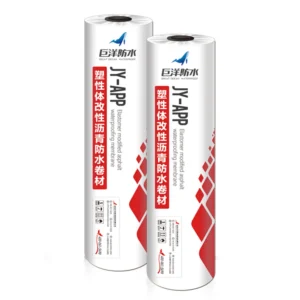
JY-APP Modified Bitumen Waterproofing Membrane Modified Asphalt Waterproof Membrane
-
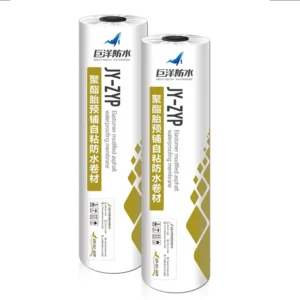
JY-ZYP Pre Laid Self-Adhesive Waterproofing Membrane
-
![JY-ZSH High Strength Self-Adhesive Waterproofing Membrane [H]](https://great-ocean-waterproof.com/wp-content/uploads/2025/12/JY-ZSH-High-Strength-Self-Adhesive-Waterproofing-Membrane-H2_1-300x300.webp)
JY-ZSH High Strength Self-Adhesive Waterproofing Membrane [H]
-
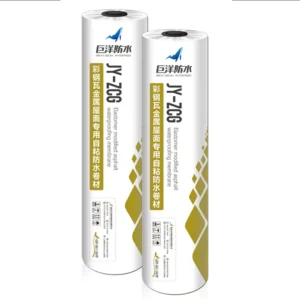
JY-ZCG Color Steel Tile Metal Roof Self-Adhesive Waterproofing Membrane
-
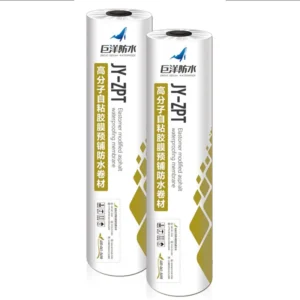
JY-ZPT Polymer Self-Adhesive Film Waterproofing Membrane